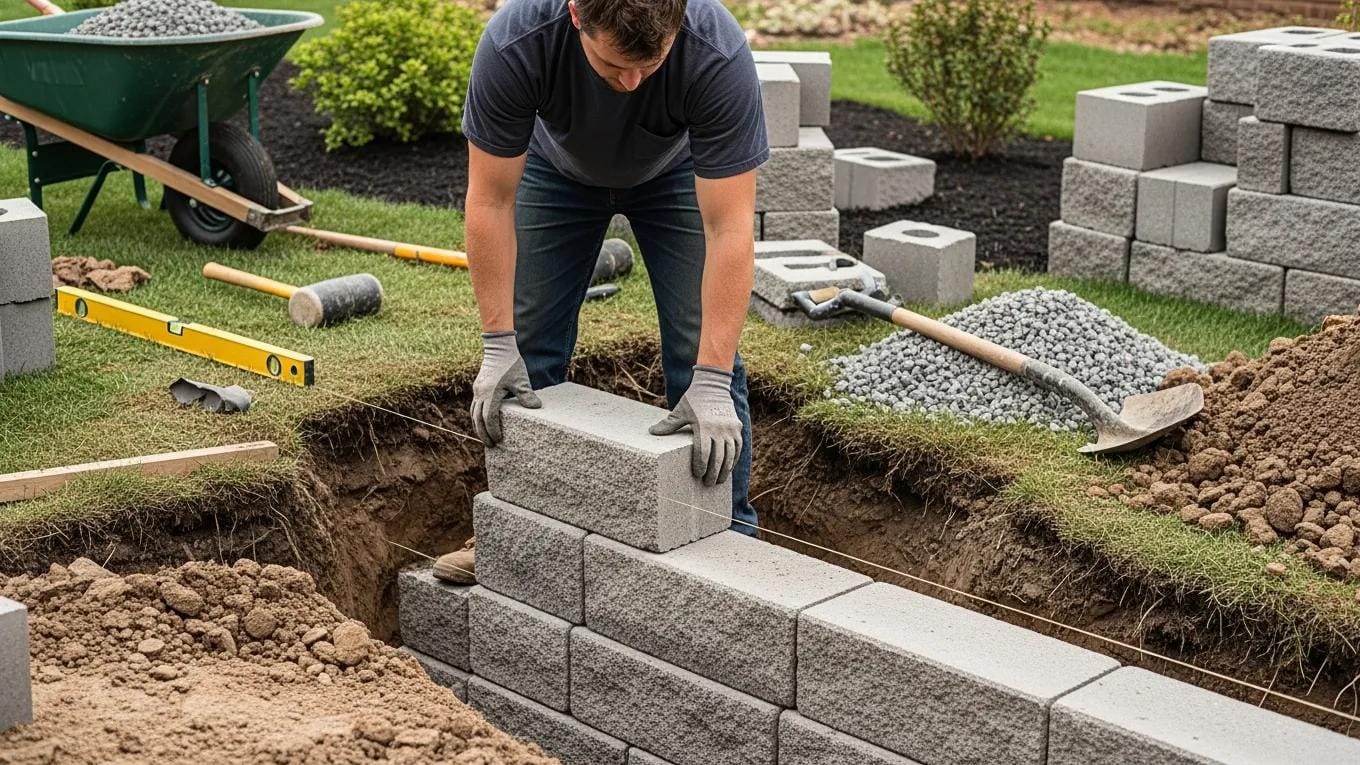
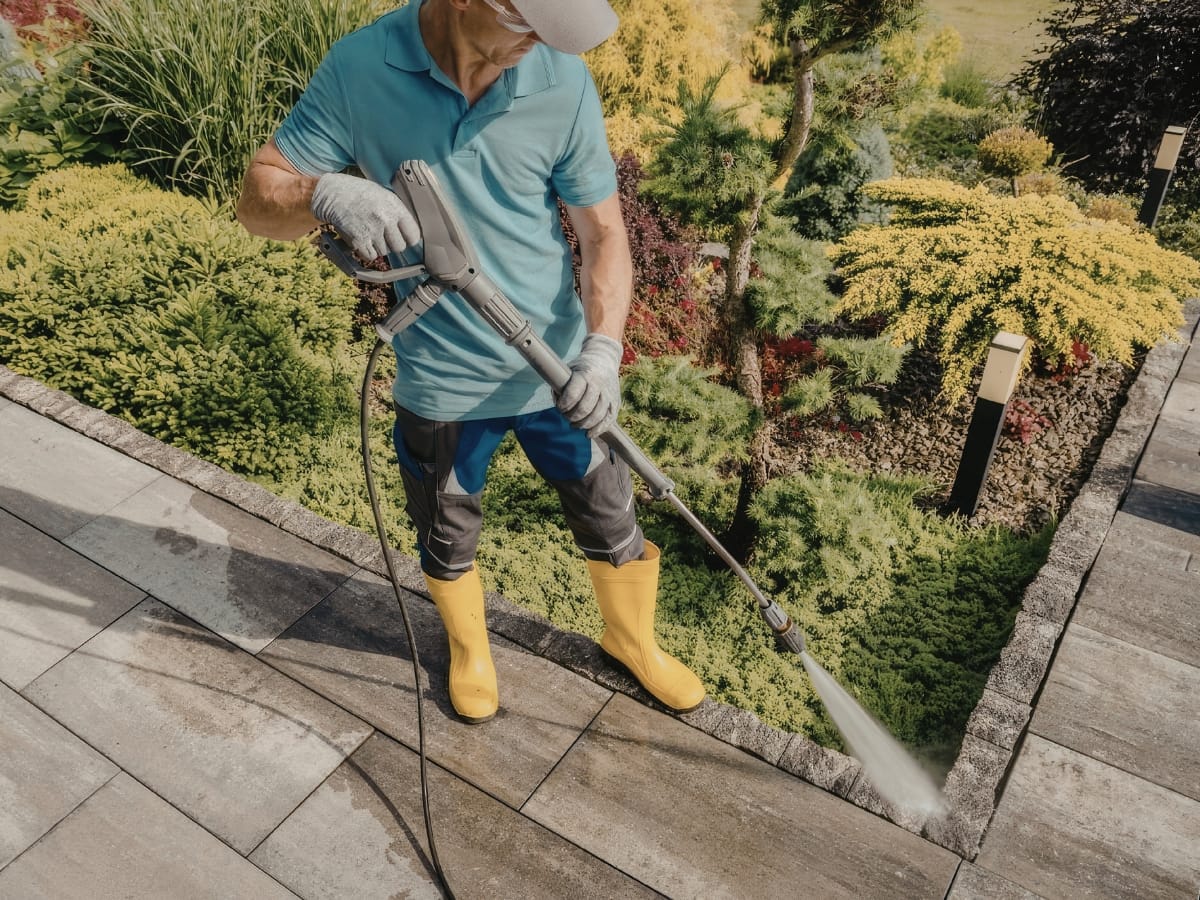
Outdoor spaces are constantly changing, even when you aren’t actively using them. Leaves collect, plants outgrow their boundaries, drainage paths become blocked, surfaces weather, and small areas of damage can gradually become larger problems.
Staying ahead of those changes can make outdoor upkeep far more manageable. The right seasonal maintenance tips help homeowners focus on what needs attention at different points throughout the year.
That might mean preparing plants for new growth, checking hardscapes after harsh weather, refreshing mulch, cleaning gathering areas, managing drainage, or protecting outdoor features before temperatures change.
Rather than waiting for a major cleanup or repair, a seasonal approach spreads the work across the year. The result is an outdoor space that stays healthier, safer, and more inviting while requiring fewer last-minute fixes when you’re ready to enjoy it.
A Seasonal Maintenance Guide for Your Outdoor Living Space
Why Does Seasonal Maintenance Protect Your Patio?

A well-built patio is designed for long-term outdoor exposure, but it still benefits from regular care. Seasonal maintenance helps homeowners catch small changes in joints, drainage, surface condition, and surrounding landscaping before those issues have time to become more disruptive.
For paver patios in particular, maintenance is less about constant upkeep and more about noticing changes early. JR Artisan Outdoors notes that occasional cleaning and periodic joint-sand replenishment are part of normal paver patio maintenance, while proper base preparation and drainage support long-term stability.
What Should You Check Each Season?
Start with the patio surface. Look for pavers that have shifted or become uneven, cracks, loose edging, deteriorating joints, and areas where weeds or organic growth are taking hold.
Next, check how water moves across and around the patio. Standing water, erosion along an edge, washed-out joint material, or runoff moving toward the house can indicate drainage or grading problems.
Useful items to check include:
- Joint sand or mortar that is missing or deteriorating
- Pavers that have shifted, settled, or become uneven
- Cracks or chips in individual units
- Standing water after rain
- Erosion around patio edges
- Organic growth or staining
- Loose edging or border restraints
- Changes in nearby soil or landscaping that affect drainage
The goal is to distinguish normal wear from changes that may affect how the patio performs over time.
Why Does Drainage Matter So Much?
Water affects both the patio surface and the base beneath it. If water repeatedly pools or washes material away from an edge, the underlying support can become less consistent and pavers may eventually shift or settle.
Landscaping changes, soil movement, clogged drainage paths, or nearby construction can alter runoff over time. Both pavers and concrete rely on appropriate slope and installation to manage that water effectively.
The difference between pavers and concrete also matters here. A comparison of pavers versus concrete patios shows that paver joints can allow some water movement depending on the system, while both surfaces still rely on appropriate slope and installation to manage runoff effectively.
When Should Joint Sand Be Replenished?
Joint sand helps stabilize individual pavers and limits unwanted movement between them. Over time, rainfall, cleaning, foot traffic, and normal weather exposure can reduce the amount of material remaining in the joints.
You do not need to refill joints according to a rigid calendar. Instead, inspect them periodically and replenish material when joints have visibly lost sand or no longer provide consistent support between the pavers.
If joint loss keeps returning in the same area, the issue may involve more than routine maintenance. Repeated washout can point to concentrated runoff, drainage problems, or instability that should be addressed before simply adding more material again.
How Should You Handle Stains and Organic Growth?
Leaves, soil, pollen, food, grease, and moisture can all leave marks on an outdoor surface. Routine sweeping and prompt cleanup can prevent some stains from becoming harder to remove, while deeper cleaning should use methods appropriate for the specific paver, stone, or concrete material.
Avoid assuming that stronger pressure or harsher chemicals are always better. Aggressive cleaning can disturb joint material or damage certain finishes, so follow the surface manufacturer’s care recommendations when dealing with difficult stains or organic growth.
Why Should You Check the Area Around the Patio?
Patio performance does not depend only on the paved surface. Soil levels, planting beds, downspouts, slopes, and nearby hardscape influence where water travels and whether patio edges remain supported.
Changes around the patio are especially worth watching after landscaping work or periods of heavy rainfall. If surrounding grades begin directing runoff toward the patio, landscape finishing and drainage adjustments may be part of the solution rather than treating the patio surface alone.
When Does a Maintenance Issue Need Repair?
Minor surface dirt or low joint sand usually falls within routine upkeep, while repeated settling, persistent standing water, spreading cracks, loose borders, or significant paver movement deserve closer attention. Those symptoms can indicate a problem with drainage, edge restraint, base preparation, or the surrounding grade.
The value of seasonal maintenance is catching those patterns while the affected area is still limited. A quick inspection a few times throughout the year can help homeowners protect the patio’s appearance while also spotting changes that may affect its long-term stability and drainage.
What Spring Prep Steps Refresh Your Yard?
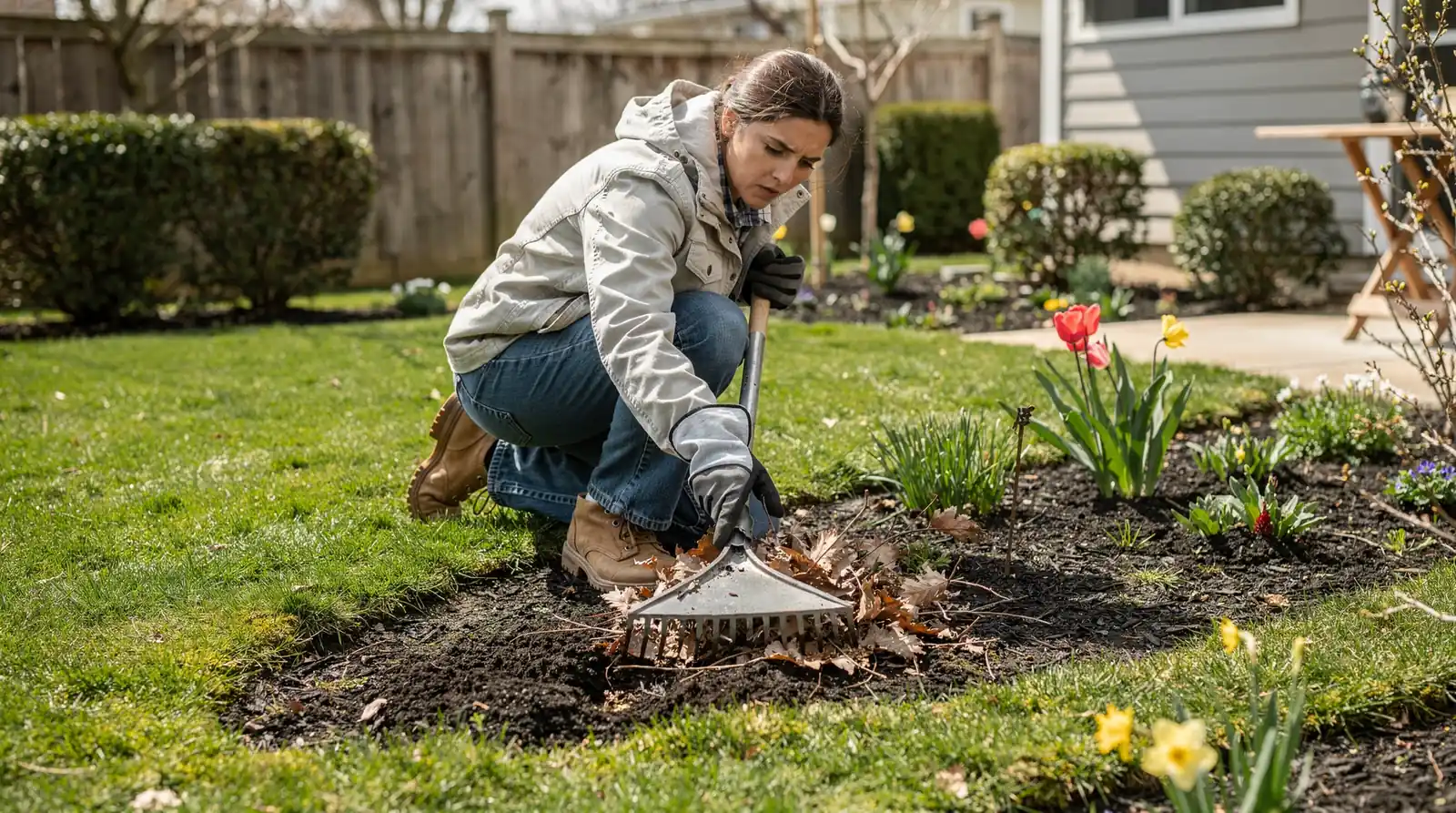
Spring is a useful time to inspect patios, walkways, retaining walls, and other outdoor surfaces after winter weather has passed.
Seasonal maintenance at this point is less about making everything look new and more about finding debris buildup, drainage changes, loose joints, settling, or surface damage before heavier spring rain and summer use put additional stress on the area.
Start with a slow walkthrough before pressure washing or moving furniture back outside. Cleaning can hide clues such as displaced joint sand, low spots where water collects, or soil erosion along a patio edge, so it helps to see how the space weathered winter before changing anything.
What Should a Spring Cleanup Checklist Include?
Begin by sweeping leaves, twigs, dirt, and other debris from patios and walkways. Clear drainage paths and edges where organic matter tends to collect.
Once the surface is visible, look for movement, drainage problems, or damage.
A practical spring checklist can include:
- Sweep patios, walkways, and steps
- Remove debris from edges and drainage areas
- Check paver joints for missing material
- Look for settling, rocking, or uneven units
- Inspect retaining walls for movement or bulging
- Note low spots where rainwater collects
- Clean stains using surface-appropriate methods
- Check borders and edging
- Trim vegetation pushing into hardscape areas
Small amounts of normal weathering may need only routine care, while repeated settling or drainage problems deserve closer attention.
Should You Pressure Wash Patios and Walkways in Spring?
Pressure washing can remove embedded dirt and organic buildup, but more pressure is not always better. High-pressure cleaning can disturb joint sand, damage certain finishes, or leave visible marks if the equipment is used too aggressively.
Check the care requirements for the specific paver, stone, or concrete surface before cleaning. In many cases, sweeping, rinsing, and a surface-appropriate cleaner are enough for routine spring cleanup without putting unnecessary stress on the material.
What Should You Check After the First Heavy Spring Rain?
Rain can reveal drainage problems that are easy to miss during dry weather. Walk the property after a storm and note where water pools, where soil has washed away, and whether runoff is moving toward patios, walls, stairs, or the foundation.
Pay particular attention to sloped areas and retaining walls. If winter or spring runoff has exposed soil, created erosion channels, or changed the grade, a properly designed retaining wall may be part of a larger erosion or elevation solution rather than a cosmetic addition.
Is Spring a Good Time to Plan Outdoor Improvements?
Spring can be a practical planning period because homeowners begin using the yard more often and can see which spaces feel cramped, disconnected, or difficult to navigate.
An undersized patio might be expanded rather than simply refreshed, while an awkward path could benefit from a more intentional walkway. A sloped area that repeatedly erodes may require grading or structural support before new planting or hardscape is added.
If a patio expansion is being considered, account for site preparation, drainage, demolition, edging, steps, and other conditions rather than budgeting for the surface material alone.
If a patio expansion is under consideration, budget planning should include more than the surface material. Site preparation, drainage, demolition, edging, steps, and other conditions can all influence paver patio costs in Georgia, so spring planning is a good opportunity to define the scope before requesting estimates.
Should Maintenance and Expansion Be Planned Together?
They should at least be considered together. Repairing joint sand, resetting pavers, or adjusting drainage in an area scheduled for expansion can mean paying for work that will soon be disturbed.
A long-term plan can separate routine seasonal maintenance from larger improvements such as patio extensions, walkways, retaining walls, or other outdoor living features.
How Does Fall Care Prepare Your Fire Features?
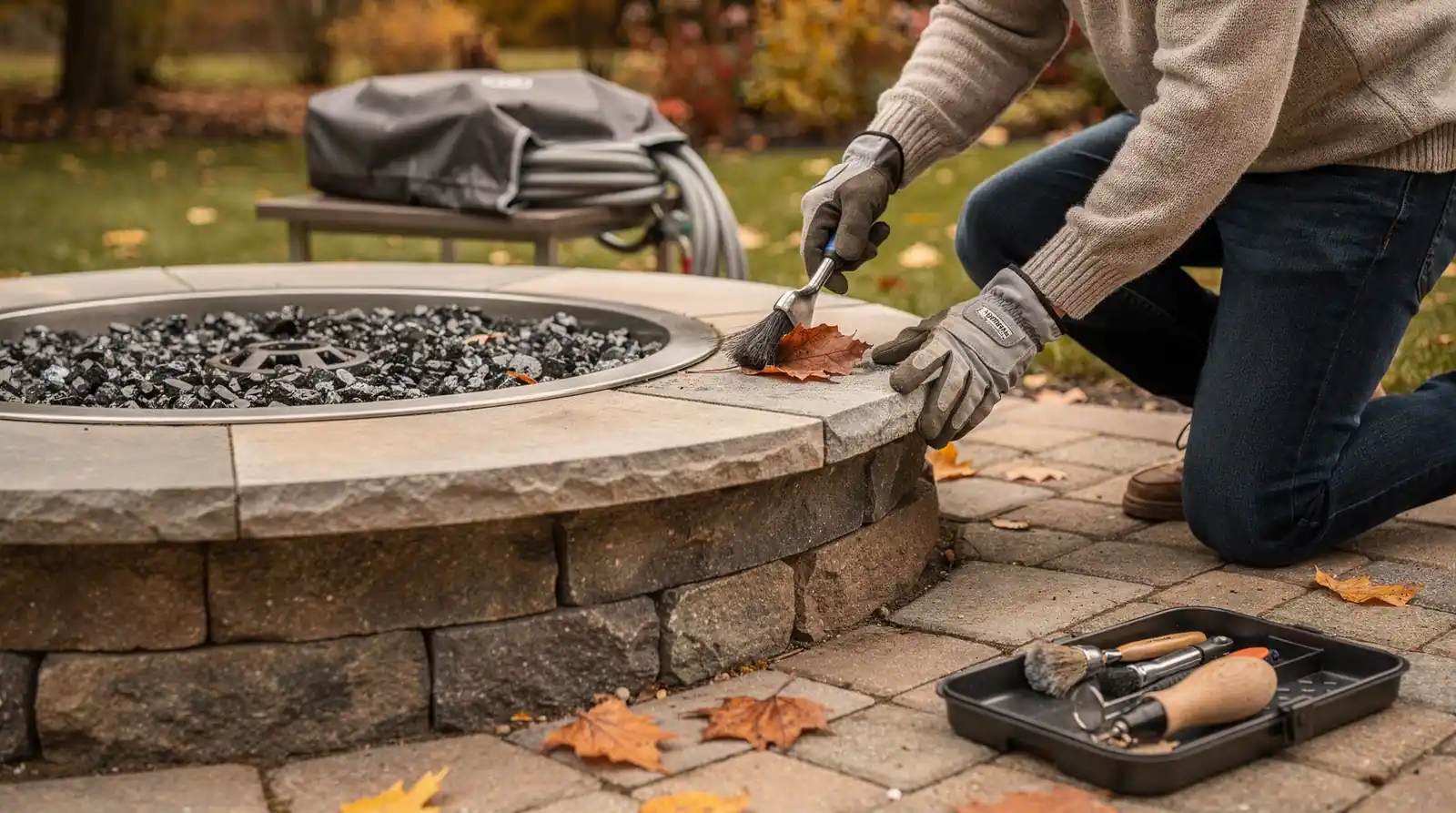
Fall is a practical time to inspect fire pits and outdoor fireplaces before cooler evenings bring more frequent use.
Seasonal maintenance should cover the fire feature, surrounding hardscape, drainage, and seating area. The exact routine depends on whether the feature burns wood, natural gas, or propane, so manufacturer instructions should guide maintenance of burners, ignition systems, fuel connections, and other components.
What Should You Inspect Before Using a Fire Feature in Fall?
Clear leaves, branches, mulch, and other combustible debris from the fire feature and surrounding area. Check visible stone, masonry, pavers, coping, and other materials for cracks, loose pieces, movement, or new staining.
For gas features, inspect accessible components for visible damage and follow manufacturer directions for the burner and ignition system. Stop using the feature if you smell gas, notice damaged fuel components, or it does not operate normally.
For wood-burning features, remove old ash when completely cool and make sure the firebox and surrounding area are clear before use.
How Should the Patio Around a Fire Feature Be Checked?
Walk around the entire seating area and look for rocking pavers, settled sections, loose borders, or areas where water collects.
If the fire feature was designed as part of a larger fire pit or outdoor fireplace installation, the patio, walkways, and seating arrangement should continue to function as one connected space rather than being maintained separately.
Why Does Drainage Still Matter Around a Fire Feature?
Fall leaves can block drainage paths and collect along patio edges. Clear leaves from low points, edges, drains, and nearby transitions before they become compacted.
If water repeatedly collects around the fire feature, investigate the drainage pattern rather than simply clearing the area after each storm.
Should Seating and Clearances Be Part of Fall Care?
Yes. Furniture often gets moved during summer gatherings, so fall is a good time to make sure chairs, cushions, planters, and other items have not gradually crowded the fire area.
Follow the fire feature manufacturer’s clearance requirements and applicable local rules for combustible materials. The Consumer Product Safety Commission also advises keeping an appropriate fire extinguisher or hose nearby and never using gasoline to start or restart a backyard fire.
What Should Be Done Before a Period of Heavy Winter Use?
If the fire feature will be used regularly through fall and winter, test it before hosting guests. Gas flames should ignite and operate normally, while wood-burning features should be free of debris and ready to vent smoke as intended.
Also check the adjoining hardscape after the first few colder or wetter weeks. New cracks, movement, water pooling, or loose masonry should be addressed rather than left until spring, particularly if the area will continue seeing foot traffic throughout winter.
What If the Fire Feature Will Not Be Used for Several Months?
Follow the manufacturer’s shutdown and storage recommendations. Covers, gas shutoff procedures, removable components, and weather protection vary by system.
Continue inspecting the surrounding patio periodically. Leaves, runoff, erosion, and surface movement can continue even when the fire feature is not being used.
How Does Fall Maintenance Fit Into the Rest of the Year?
Spring maintenance is useful for finding what winter left behind, while fall care is more preventive. The goal is to enter the colder months with drainage paths clear, hardscape stable, and fire features ready for safe seasonal use.
That makes seasonal maintenance a year-round cycle rather than a one-time cleanup. Each inspection gives homeowners a chance to catch changes while they are still localized and easier to address, helping the patio and fire feature remain functional as the weather and the way the space is used change throughout the year.
How Should You Protect Hardscaping in Summer and Winter?

Summer and winter create different maintenance needs for patios, walkways, retaining walls, and other hardscaping.
The appropriate routine depends on the material. Pavers, concrete, natural stone, and masonry respond differently to weather and cleaning products, so manufacturer recommendations should guide specific care.
What Should You Watch for During Summer?
Georgia summers bring heat, humidity, heavy rain, and increased outdoor use. Routine sweeping and prompt stain cleanup can prevent pollen, soil, food residue, and organic growth from becoming harder to remove.
After thunderstorms, check patios and walkways for standing water, erosion, or drainage changes. If irrigation systems run regularly, make sure sprinklers are not repeatedly soaking paved surfaces or directing water toward retaining walls and patio edges.
Avoid aggressive cleaning simply because a surface looks weathered. Excessive pressure can disturb paver joints or damage certain finishes.
Does Summer Heat Damage Patios?
Heat by itself does not mean a patio is failing, but high surface temperatures can make certain materials uncomfortable and can make existing problems easier to notice.
Darker surfaces may become particularly hot in direct sun, while repeated wetting and drying can highlight staining, joint loss, or movement that was already developing.
Avoid automatically reaching for aggressive cleaners or high-pressure washing when surfaces look weathered. Cleaning methods should match the material and finish, since excessive pressure can disturb paver joints or damage more delicate surfaces.
What Should You Do Before Winter Weather Arrives?
Clear leaves and debris from patios, walkways, steps, drainage paths, and joints. Check low spots, clogged drainage areas, eroded edges, and poorly supported transitions before colder weather arrives.
Do not assume every ice-melting product is appropriate for every surface. Some chloride-based deicers can contribute to deterioration of concrete and concrete joints under freeze-thaw conditions. Follow the manufacturer’s recommendations for pavers, stone, decorative concrete, or masonry.
Should You Use Deicing Salt on Patios and Walkways?
Do not assume that any ice-melting product is safe for every hardscape surface. Some chloride-based deicers can contribute to deterioration of concrete and concrete joints under freeze-thaw conditions, so product compatibility should be checked before application.
For pavers, natural stone, decorative concrete, or masonry, follow the material manufacturer’s recommendations for winter treatment. Using a product simply because it is labeled as an ice melt does not guarantee that it is appropriate for the surface beneath it.
How Should Snow and Ice Be Removed?
Use tools that are unlikely to chip, gouge, or scratch the surface. Plastic-edged shovels or brooms are generally gentler than sharp metal tools for light accumulation. Avoid aggressively chipping ice that has bonded to pavers, stone, or concrete.
What Should You Inspect After a Freeze?
Once temperatures rise, look for new cracks, loose pieces, movement, joint deterioration, or areas where water collects differently.
Repeated movement, widening cracks, persistent ponding, or recurring joint loss deserve more attention than an isolated cosmetic change because they may indicate drainage, base, or structural problems.
Why Should You Check Transitions Between Hardscape and Landscaping?
Changes often appear first where two materials meet. Soil can erode away from patio edges, turf can hold moisture against borders, and surrounding grades can shift how runoff moves after heavy rain.
That makes transitions worth including in seasonal maintenance rather than inspecting the patio in isolation. Proper drainage is also important where artificial turf meets hardscaping, since both systems depend on a stable base and a clear path for water to move away rather than collect.
How Often Should Seasonal Maintenance Be Done?
A rigid monthly schedule is usually unnecessary for durable outdoor hardscaping. A more practical approach is to perform a thorough check as seasons change and add another inspection after unusually heavy rain, freezing weather, landscaping work, or any event that noticeably changes drainage or surface conditions.
Year-round seasonal maintenance works best as a simple cycle of cleaning, observing, and responding early.
Summer checks catch drainage and heavy-use issues, winter preparation reduces avoidable weather exposure, spring reveals what colder months left behind, and fall gets outdoor spaces ready for another season of use.
Frequently Asked Questions About Seasonal Maintenance
Why Does Seasonal Maintenance Protect Your Patio?
Seasonal maintenance helps catch small changes in joint material, drainage, surface movement, staining, and surrounding landscaping before they become more disruptive. Regular checks also make it easier to notice whether a patio is changing from one season to the next instead of waiting until a problem becomes obvious.
Maintenance cannot prevent every crack, stain, or shifted paver, and normal weathering should not automatically be treated as structural damage. The goal is to identify patterns such as repeated settling, persistent standing water, recurring joint loss, or worsening cracks that may deserve closer attention.
What Does a Seasonal Patio Check Actually Involve?
Start by walking the entire patio and looking at the surface, joints, edges, and nearby drainage areas. Check for loose or uneven pavers, missing joint material, cracks, stains, erosion, standing water, or changes where the patio meets soil, planting beds, steps, or other hardscape.
A seasonal check should also include cleanup because leaves, dirt, and organic growth can hide changes underneath. Once the surface is clear, it is easier to tell whether an issue needs routine maintenance or a more involved repair.
What Should a Spring Cleanup Checklist Include?
Spring cleanup should include sweeping patios and walkways, removing leaves and branches, clearing drainage paths, inspecting joints, and checking for movement or damage that developed over winter.
Homeowners should also look for low spots where rainwater collects and patio edges where soil may have washed away.
Cleaning methods should match the material rather than automatically relying on high-pressure washing. Pavers, natural stone, concrete, and masonry can have different care requirements, and overly aggressive cleaning can disturb joints or damage some finishes.
How Often Should Seasonal Maintenance Be Done?
Most hardscaping does not require a rigid monthly maintenance schedule. A thorough inspection as the seasons change, along with additional checks after unusually heavy rain, freezing weather, landscaping work, or other major changes around the property, is usually a more practical approach.
The frequency may also depend on the surface and how the space is used. A shaded patio surrounded by trees may need more frequent debris cleanup than an open patio, while an area with recurring drainage problems deserves closer monitoring after storms.
Should You Reseal a Patio Every Year?
Not necessarily. Sealing schedules depend on the patio material, the sealer product, exposure, previous treatments, and manufacturer recommendations, so an annual schedule should not be assumed for every surface.
Some pavers, concrete finishes, or natural stone installations may benefit from periodic sealing, while others may not require it at all. Before applying a new product, confirm that the existing surface and previous treatment are compatible with the sealer being considered.
What Should You Do if Pavers Start Shifting?
One slightly uneven paver may be a localized problem, but recurring movement deserves more attention. Shifting can be associated with base settlement, edge movement, erosion, drainage problems, or loss of supporting joint material.
Avoid repeatedly resetting the same area without asking why it keeps moving. Seasonal maintenance is most useful when it helps identify whether the problem is isolated or being caused by a condition underneath or around the patio.
Is Seasonal Maintenance Different for Pavers and Concrete?
Yes. Paver maintenance often focuses on joint condition, individual movement, edging, and localized settling, while concrete maintenance places more emphasis on cracking, joints, surface wear, and drainage across a continuous slab.
Both surfaces still depend on proper drainage and a stable base. A good seasonal maintenance routine should therefore match the material rather than applying one checklist to every type of hardscape.
When Should You Call a Professional?
Professional evaluation becomes more useful when problems keep returning or affect more than the surface appearance.
Persistent ponding, spreading cracks, substantial paver movement, unstable steps, bulging retaining walls, or repeated erosion can point to drainage, base, grading, or structural issues that routine cleaning will not correct.
Homeowners do not need to treat every stain or loose joint as an emergency. The better threshold is whether the problem is worsening, recurring, affecting safety, or changing how the outdoor space performs.
Conclusion
Seasonal maintenance can help outdoor spaces stay attractive, functional, and ready to enjoy throughout the year. Regularly inspecting patios, walkways, retaining walls, outdoor kitchens, drainage systems, and other features makes it easier to address wear or damage before small problems become larger repairs.
Adjusting cleaning and maintenance routines as weather conditions change can also help protect materials and extend the life of your outdoor investments.
For professional outdoor living solutions and expert craftsmanship, choose JR Artisan Outdoors. If your outdoor space needs maintenance, improvements, or a fresh design for the seasons ahead, call (470) 762-0777 to speak with the team at JR Artisan Outdoors or visit their website to request your free quote today.